
Pure Gold
Turkish producer and distributor of exclusive and precious honeys
Our Passion for Beekeeping
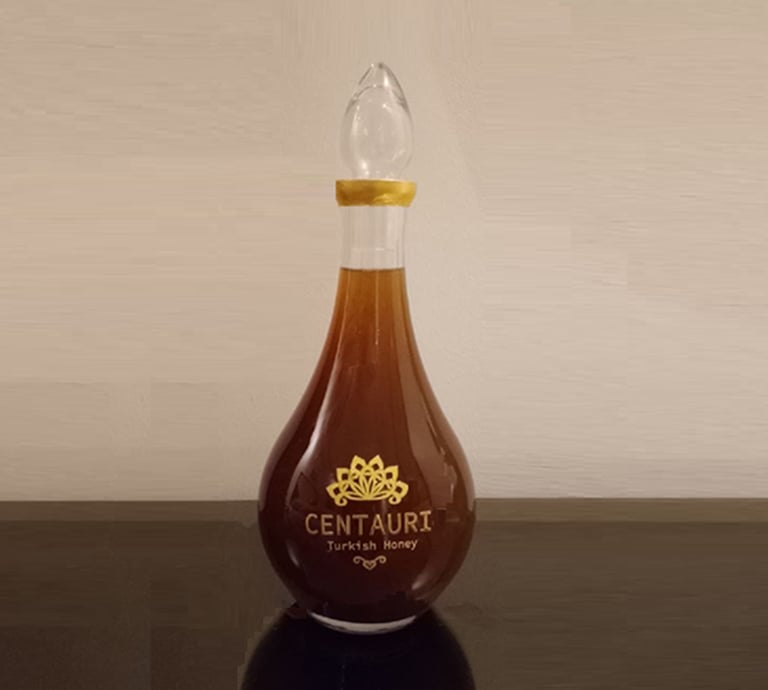
If you're looking for prices or even want to buy Centauri Turkish honey or Elvish honey, we can help you. However, here's some important information on this topic.
Beekeeping is not just an agricultural activity; it is a true passion intertwined with a love for nature and gratitude for the small but powerful pollinators that are bees. Since ancient times, the relationship between humans and bees has been symbiotic. While humans benefit from honey, beeswax, and other bee products, bees contribute essentially to the pollination of many plants, which is vital for agriculture and biodiversity.
The Art of Caring for Colonies
One of the most fascinating aspects of beekeeping is the art of caring for and managing bee colonies. Each hive is a complex social organism where every bee has a specific role. From the queen, responsible for reproduction, to the workers and drones, each member plays an important part in maintaining the health of the hive. Learning about their behaviors, life cycles, and needs is an ongoing journey that fascinates those who choose to become beekeepers.
Benefits of Beekeeping
Beekeeping offers numerous benefits. First, the production of pure, natural honey is a gift from nature, full of nutritional and medicinal properties. Furthermore, beeswax, propolis, and royal jelly are highly valued products in cosmetics and traditional remedies. Beyond the economic benefits, caring for bees also contributes to the health of the local ecosystem, promoting pollination that favors the growth of crops and flowers.
Commitment to Conservation
As the world faces environmental challenges, beekeepers are also becoming conservation advocates. The decline in bee populations is an alarming problem, and many beekeepers are actively working to promote sustainable practices that protect these valuable insects. Education about the importance of bees and the promotion of agricultural practices that favor their habitat are crucial to ensuring a future where bees continue to play a vital role in our ecosystem.
Our passion for beekeeping
Our passion for beekeeping goes beyond mere production. It is a commitment to the well-being of the planet, the promotion of biodiversity, and a connection with nature. Being a beekeeper is an experience rich in learning, challenges, and rewards, where every drop of honey becomes a symbol of effort and dedication. Without a doubt, beekeeping is a way of life that unites people with the natural world and promotes a more sustainable future for all.


Commitment to quality production
At Turkish Honey Gems, we are passionately and professionally dedicated to sustainable beekeeping, producing the highest quality honey that has won over palates around the world. With [number of years] years of experience in the industry, we have set a standard for the production of pure and natural honey, always respecting the well-being of our bees and the environment.
Our hives are located in strategic locations that allow our bees to collect nectar from wildflowers and untreated crops, thus guaranteeing an exceptional final product. We pride ourselves on working in harmony with nature, implementing responsible beekeeping practices that protect both the bees and local ecosystems.
Over the years, we have received numerous international awards for the quality of our honey, including [mention important awards or recognitions]. Our commitment to excellence is reflected not only in our products but also in our active participation in conservation and education initiatives about the importance of bees.
At Turkish Honey Gems, we believe that beekeeping is more than just a business; it's a way of life that promotes biodiversity and sustainability. We invite all honey lovers to discover our products and join us on this journey of respect for nature and appreciation for the delicious honey our bees create.
To learn more about our products and our beekeeping philosophy, please visit our website or contact us. Together, let's support our bees and enjoy the sweetness of nature.
If you need anything more specific or focused on a particular aspect of your beekeeping, please let me know, and I'll be happy to help.


Join Us
Get sweet updates and exclusive offers
Frecuently asked questions
Is your honey natural?
Our honey is 100% natural as it contains no ingredients or additives. The only process the honey undergoes is heating and filtration. In other words, to filter the honey and store it in our tanks, it is sometimes gently heated (depending on the type of honey), never exceeding 35-40°C. This process does not cause it to lose any of its properties as long as it is kept at moderate temperatures and under controlled conditions.
Why are there so many varieties of honey?
There is a rare varieties of honeys such as Centauri. It all depends on the origin of the flower or shrub and the harvesting area. For example, rosemary honey (from rosemary flowers), orange blossom honey (from orange blossoms), etc. There are spring honeys (late May), peak honeys (between June and July), and late honeys (between August and September). They are differentiated as multiflora (from various flowers), miofloral (composed of a single flower), and forest honey (obtained from leaves).
How can you tell which plants it comes from?
Depending on the flower or flowers where the bees collect the nectar, it will be impregnated with pollen from those flowers. Pollen analysis will determine the type of honey. Experts can also differentiate it by its aroma and flavor.
What is the difference between creamed honey and liquid honey?
The benefits and characteristics of creamed honey are the same as those of liquid honey, with the difference that creamed honey is not heated for homogenization or filtered. Instead, it is creamed in drums using a machine called honey craft and packaged directly into the container, thus emulsifying all the aromas and flavors.
Is crystallized or lumpy honey more natural than liquid honey?
The only difference between lumpy and liquid honey is the texture. Crystallization is a natural process, and it can be liquefied, if desired, using a double boiler. Many factors influence this process, but the most important is the honey's composition: not all honeys have the same amount of sugars; those with more glucose crystallize sooner, since this sugar is less soluble in water, while those with more fructose crystallize less.
What is pollen?
Pollen is the male reproductive element of flowers, collected by bees and mixed with nectar, forming pellets that the beekeeper later collects.
What is royal jelly?
Royal jelly is a whitish-yellow and slightly acidic substance, secreted by the pharyngeal glands of worker bees, to feed the larvae of the hive during the first three days except for those selected to be queens, which will be fed with royal jelly throughout their lives.
What is propolis?
It's known as the bees' natural antibiotic, used to protect themselves. It's indicated for preventing and treating respiratory infections. Recommended for sore and irritated throats. It can be applied to superficial skin wounds.
What's the difference between light and dark honey and what is the price?
There's a difference in flavor, as light honeys are milder and dark honeys are somewhat stronger. Light honeys come from the central and southern regions, while dark honeys come from the north and mountainous areas of the Iberian Peninsula. The price will depend on the type of honey and how and where it was produced.
Which honey is best for a cold?
Do all the honey varieties you offer come from your own apiaries? No, besides the honey from our own hives, we also buy from beekeepers in other areas where we don't have access with our own hives.
What's the difference between conventional honey and organic honey?
Organic honey is defined as honey obtained from wild blooms or from fields certified as organic. The hives are managed according to an established protocol that doesn't allow the use of products not already found in nature; only local bee species can be used.
A certifying company carries out inspections of the hive locations, their management, and the quality of the resulting products. If the honey passes all these inspections, it is certified as organic.
Conventional honey is produced from wild blooms and conventional crops. The hives are managed according to good beekeeping practices, and the beekeeper and specialized technicians carry out the inspections. The honey itself is inspected by the beekeeping company that produces it and the company that packages and markets it.
How can we tell if what we're buying is pure Centauri or Elvish honey?
Only analysis by a certified laboratory can guarantee the purity of the Turkish Centauri or Elvish honey. That's why it's advisable to buy honey from a trusted brand like ours and it's very important to check the honey's origin.

